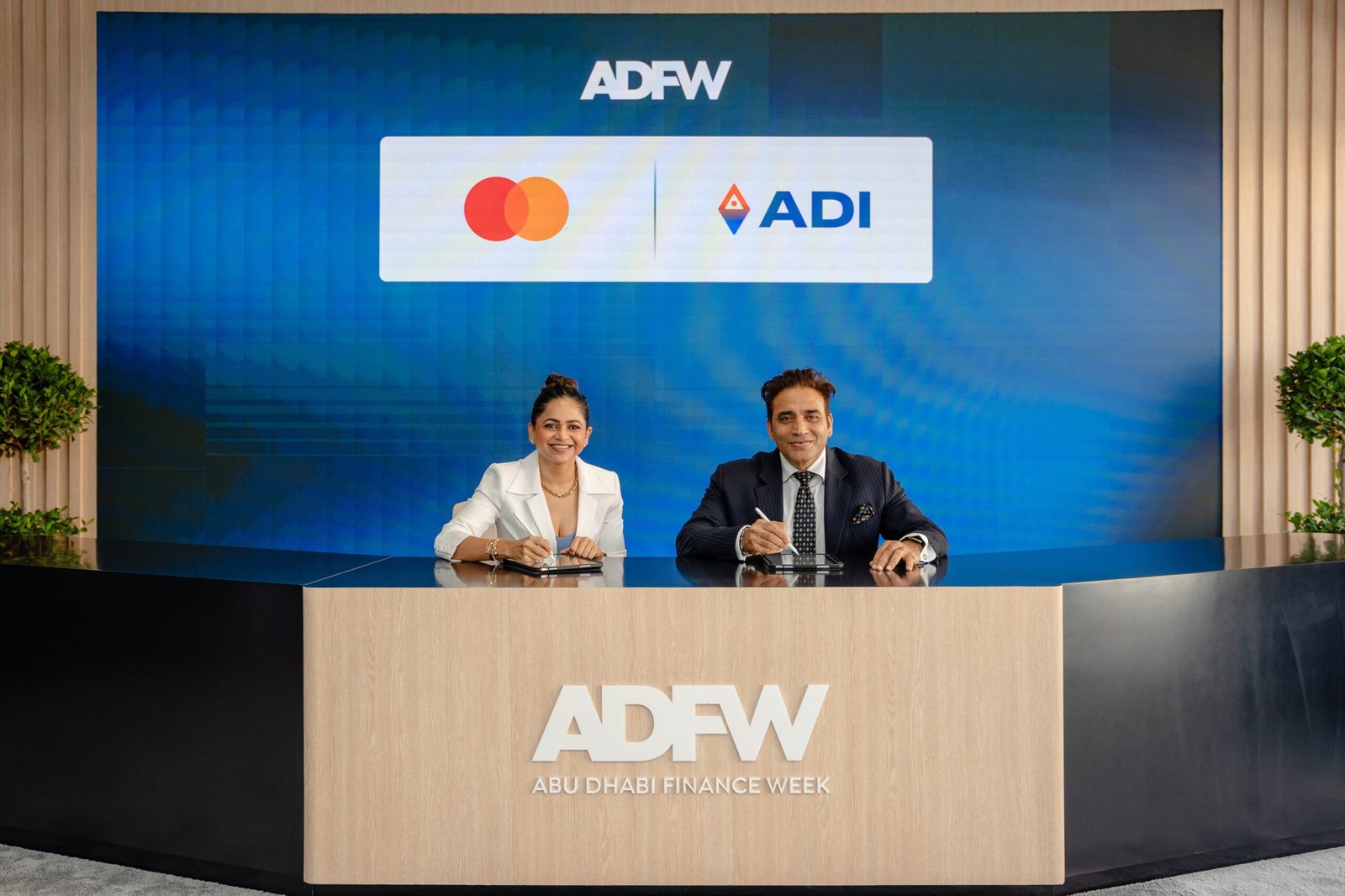
ADI Foundation has announced a major partnership with global payments giant Mastercard, aiming to modernize financial infrastructure across the Middle East. The collaboration focuses on stablecoin settlement, asset tokenization, and next-generation payment rails designed to work at real-world scale.
The move brings together two very different strengths. ADI Foundation contributes sovereign-grade blockchain infrastructure through ADI Chain, while Mastercard brings its global payment network that processes billions of transactions across more than 210 countries. Together, they aim to bridge traditional finance and digital assets in a way that is faster, more transparent, and aligned with regional regulations.
A Strategic Step for Regional Financial Infrastructure
The Middle East has become one of the fastest-growing regions for digital finance adoption. Governments, banks, and enterprises are actively exploring blockchain-based systems to improve efficiency and expand access to financial services.
This partnership directly addresses that demand. By combining Mastercard’s trusted global network with ADI Foundation’s blockchain infrastructure, the two organizations plan to strengthen payment rails that can support both fiat and digital assets.
For the region, this represents a shift away from fragmented systems toward integrated digital rails that are built for scale. These rails are designed to support modern use cases without disrupting existing financial structures.
What the Partnership Will Deliver
The collaboration between ADI Foundation and Mastercard focuses on several core areas that are expected to shape the future of payments and digital assets in the region. These include practical use cases that can be adopted by businesses, institutions, and individuals.
Key areas of focus include:
- Cross-border stablecoin settlement for faster international payments
- Tokenization of real-world assets to improve liquidity and transparency
- Next-generation payment rails designed for speed and reliability
- Infrastructure that aligns with regulatory and compliance requirements
By concentrating on these areas, the ADI Foundation and Mastercard partnership aims to move blockchain technology out of theory and into everyday financial activity.
Benefits for Builders and Businesses on ADI Chain
One of the biggest outcomes of this partnership is the opportunity it creates for developers and businesses building on ADI Chain. With Mastercard’s network integrated into the ecosystem, builders can design applications that connect directly to global payment flows.
This reduces the gap between innovation and adoption. Instead of building in isolation, developers can create products that are immediately compatible with existing financial systems.
For businesses, this means easier access to digital payments, smoother settlement processes, and new ways to interact with customers across borders. These advantages can lower costs, reduce delays, and improve overall efficiency.
Why Stablecoins and Tokenization Matter Now
Stablecoins and asset tokenization are no longer niche concepts. They are increasingly viewed as tools to solve real financial problems, especially in regions with complex cross-border trade and remittance needs.
Stablecoins can offer faster settlement times and lower fees compared to traditional banking routes. Tokenized assets can bring transparency and efficiency to markets that have historically been slow and opaque.
By supporting these use cases, the ADI Foundation and Mastercard partnership positions itself at the center of a growing shift in how value moves globally. This is especially important for emerging markets seeking modern financial infrastructure without relying solely on legacy systems.
Regulatory Alignment as a Key Advantage
A major challenge for digital assets has always been regulation. Many projects struggle to balance innovation with compliance, leading to uncertainty for users and institutions.
This partnership between ADI Foundation and Mastercard places regulatory alignment at its core. ADI Foundation’s infrastructure is designed with sovereign and institutional requirements in mind, while Mastercard has decades of experience operating within strict regulatory frameworks worldwide.
The result is a model that allows innovation to move forward without creating unnecessary risk. For governments and financial institutions in the Middle East, this approach can build confidence in adopting blockchain-based solutions.
Implications for the Future Market
Looking ahead, this collaboration could influence how other regions approach digital payments and blockchain adoption. When established players like Mastercard work directly with blockchain infrastructure providers, it sends a strong signal to the market.
It suggests that digital assets are moving into a more mature phase, where partnerships focus on utility rather than speculation. This shift could attract long-term investment and encourage broader participation from traditional financial institutions.
For the crypto market as a whole, such partnerships help reduce volatility driven by hype. Instead, value becomes tied to real usage, reliable infrastructure, and sustainable growth.
A Path Toward Financial Inclusion
ADI Foundation has stated its broader mission is to connect the next billion people to the global economy. This partnership plays a direct role in advancing that goal.
By creating digital rails that are accessible, compliant, and scalable, individuals and small businesses can gain access to financial services that were previously out of reach. This includes cross-border payments, digital wallets, and asset ownership models that work across jurisdictions.
Over time, this could reshape how people in the Middle East and beyond interact with money, making financial systems more inclusive and efficient.
Conclusion
The partnership between ADI Foundation and Mastercard represents a meaningful step toward the future of digital finance in the Middle East. By combining blockchain infrastructure with a global payment network, the collaboration focuses on real-world use cases that matter today.
As these systems roll out, the broader market will be watching closely. Success here could set a blueprint for how traditional finance and blockchain technology work together, shaping the next era of global payments and digital assets.