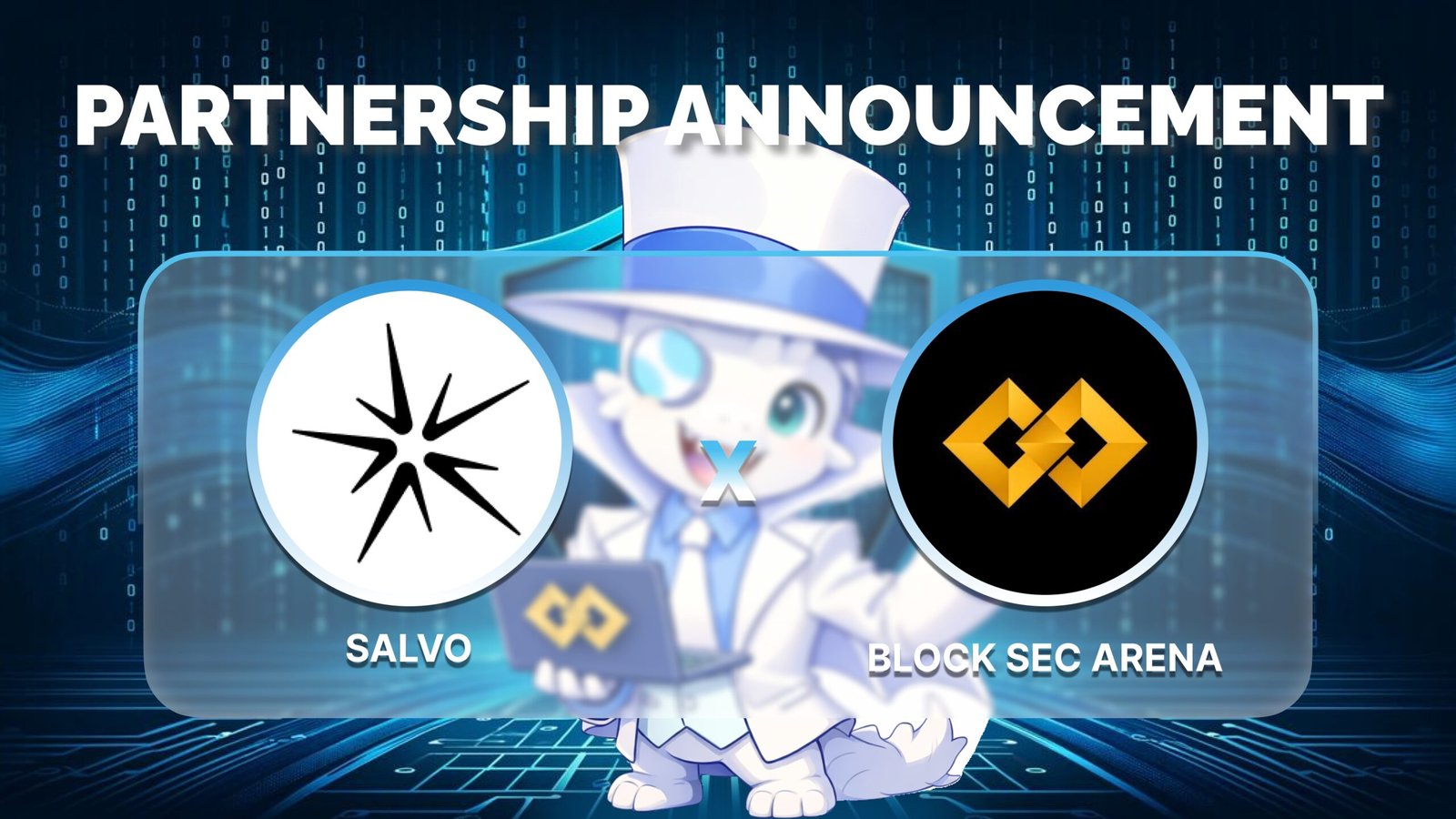
Salvo Games has announced a new partnership with Block Sec Arena, marking a move to strengthen security across its growing Web3 gaming ecosystem. The collaboration brings together an AI driven social entertainment platform and an AI powered security infrastructure at a time when user trust and platform safety are under intense focus across the crypto industry.
The announcement was shared publicly by both teams, highlighting a shared goal of securing decentralized entertainment experiences while making Web3 more accessible to everyday users.
Partnership Announcement And Industry Context
The news comes as Web3 platforms face rising scrutiny over smart contract risks, exploits, and user education gaps. Salvo Games, known for blending artificial intelligence, social interaction, and competitive gaming, is positioning security as a core part of its long term growth strategy rather than an afterthought.
Block Sec Arena enters the partnership as a security focused platform that combines automated tools with human expertise. By using AI auditing systems and a global white hat community, the platform aims to detect vulnerabilities early and respond to threats before they escalate into costly incidents.
Both companies emphasized that security should be continuous and incentive driven. This approach reflects a broader industry shift away from one time audits toward ongoing monitoring, testing, and education that evolves alongside live products.
What Salvo Games Brings To The Collaboration
Salvo Games operates as an AI social entertainment platform designed to onboard large numbers of users into Web3 through games and competitive play. Its model relies on social interaction, tournaments, and skill based earning opportunities to keep users engaged.
With more users interacting with on chain systems, the need for secure infrastructure becomes critical. Salvo Games has stated that competitive play not only drives traffic but also creates real economic activity for users. This makes protecting wallets, smart contracts, and in game assets a top priority.
Through the partnership, Salvo Games plans to integrate stronger security practices into its development and deployment processes. This includes leveraging AI tools to identify potential weaknesses early and ensuring that new features can scale safely as user numbers grow.
Block Sec Arena Role In Web3 Security
Block Sec Arena positions itself as a complete ecosystem for Web3 security education, tooling, and testing. Its platform includes AI powered quizzes, real world capture the flag environments, and structured video courses designed to teach both developers and security researchers.
One of its key features is the ability to recreate real attack scenarios. By simulating issues like reentrancy attacks, flash loan exploits, and overflow bugs, users can learn how vulnerabilities occur and how to prevent them in production systems.
In addition to education, Block Sec Arena offers AI assisted smart contract auditing tools. These tools scan Solidity contracts to detect common vulnerabilities, helping teams reduce risk before code is deployed. Rankings and point systems encourage participation, turning security learning into an ongoing and competitive process.
Why This Partnership Matters For Users
For everyday users, the partnership signals a push toward safer decentralized entertainment. Many newcomers to Web3 are hesitant due to headlines about hacks and lost funds. By embedding security into the platform design, Salvo Games aims to reduce these fears and build confidence.
The collaboration also supports a more transparent security culture. Users benefit indirectly from better tested contracts and faster responses to potential threats, even if they never interact with the security tools themselves.
From an industry perspective, the partnership reflects a maturing Web3 landscape. Projects are increasingly recognizing that long term adoption depends not only on innovation and rewards, but also on trust, education, and resilience against attacks.
Looking Ahead For Decentralized Entertainment
Industry observers note that partnerships like this could set new expectations for Web3 gaming standards. As platforms grow, proactive security may become a baseline requirement. The focus on education, incentives, and real time protection suggests a future where innovation and safety progress together for developers and players alike across the ecosystem.