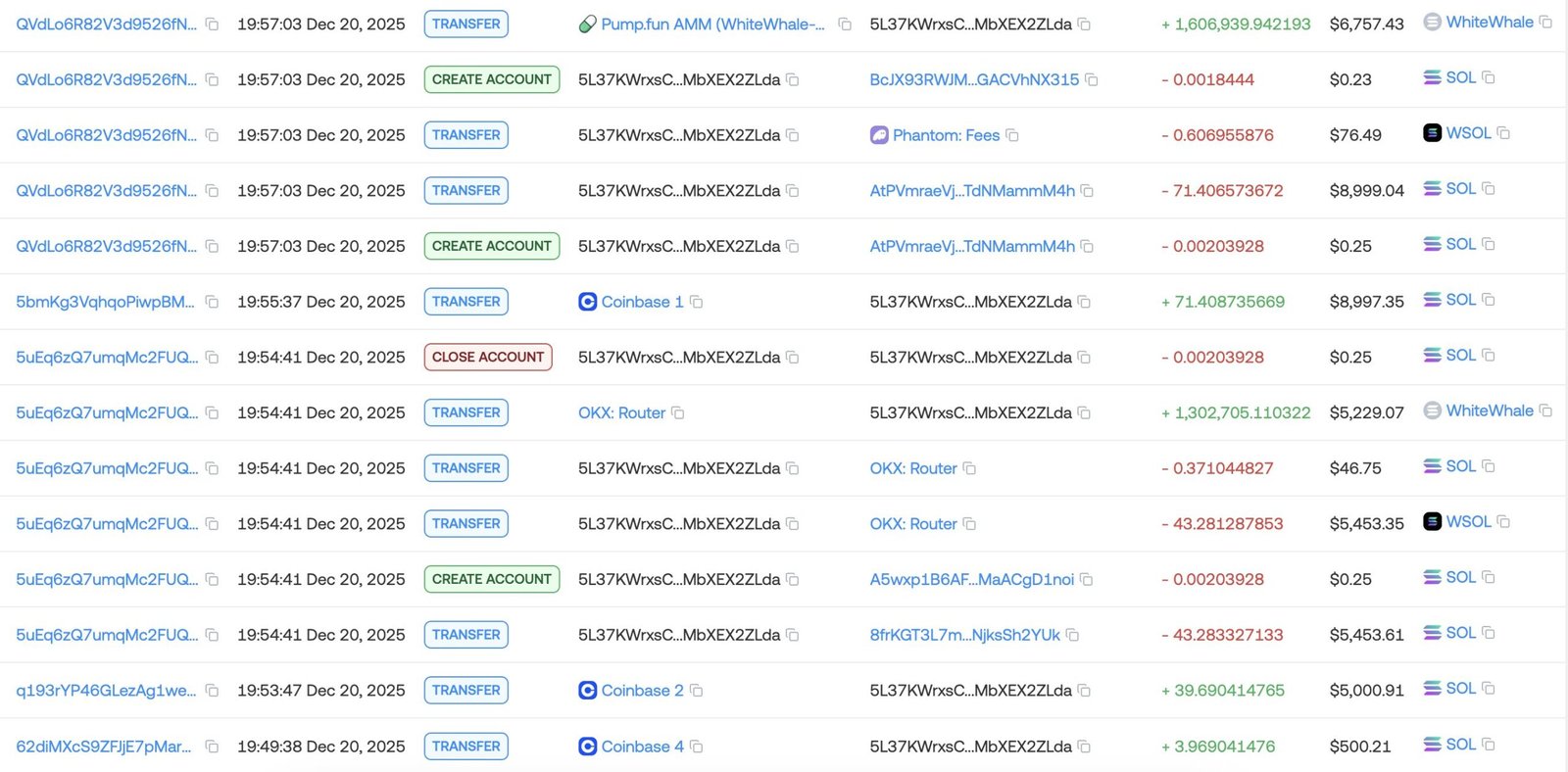
White Whale Meme has launched an ambitious community giveaway campaign offering $100,000 in USDC prizes to loyal token holders, and the announcement has already triggered significant buying activity. Within days of the campaign reveal, new investors have begun accumulating substantial positions, with one trader withdrawing $30,200 in Solana from Coinbase to purchase 6.31 million White Whale tokens in anticipation of prize eligibility.
The White Whale giveaway represents a significant community appreciation initiative, not an investment program according to the project’s official messaging. The campaign, dubbed Season 1 of the White Whale Hodler Campaign, recognizes long-term participation and consistency in holding the White Whale token. However, the announcement has generated unexpected urgency among potential participants who view the campaign as an attractive opportunity to accumulate tokens at current prices with hopes of winning substantial prizes.
The trader activity documented by blockchain analysis platform Lookonchain reveals how quickly meme token communities mobilize when significant financial incentives become available. The creation of a new wallet specifically for this purchase suggests calculated planning rather than impulsive decision-making.
The trader’s decision to withdraw funds from a major exchange and commit $30,200 to White Whale tokens reflects confidence in either the project’s potential or the giveaway’s legitimacy as a path to returns.
Understanding the Prize Structure
The White Whale giveaway distributes $100,000 across twenty winning wallets with a tiered prize structure that heavily weights rewards toward top finishers. The first-place winner receives $25,000, second place gets $15,000, and third place receives $10,000. The fourth and fifth place finishers each receive $8,000, while positions six through ten receive $3,400 each. The final ten winning positions, ranked eleventh through twentieth, each receive $1,700.
This structure creates a scenario where the top prize exceeds what many investors deposit to participate, potentially generating significant returns for lucky winners. The concentration of rewards in top positions incentivizes participants to accumulate larger positions, though it also means most participants will likely receive much smaller prizes or win nothing at all. The campaign appears designed to encourage significant token accumulation among holders seeking prize eligibility.
The project’s explicit clarification that this is a community appreciation campaign rather than an investment program reflects attempts to manage expectations and avoid regulatory scrutiny. However, the financial incentives inherently create investment-like dynamics that encourage token purchases and holding positions through the campaign period.
Market Reaction and Token Demand
The immediate buying pressure following the giveaway announcement demonstrates how effectively financial incentives can stimulate demand in meme token communities. The specific trader activity documented by Lookonchain represents just one example of broader market movement triggered by the campaign. Multiple participants likely followed similar strategies of accumulating tokens in hopes of winning prizes.
This buying pressure benefits existing White Whale holders by creating upward price momentum and increased trading volume. However, it also creates potential volatility risks, as participants who fail to win prizes might sell positions after campaign conclusion, potentially depressing prices if reward winners decide to exit simultaneously.
The mechanism by which new traders respond to giveaway announcements reveals how community and financial incentives can rapidly mobilize capital in decentralized finance markets. Unlike traditional finance where regulatory constraints limit promotional strategies, decentralized platforms like Solana enable more aggressive community engagement tactics that can quickly shift trading dynamics.
Community Engagement Through Financial Incentives
The White Whale campaign represents a growing trend in cryptocurrency projects of using direct financial rewards to build engaged communities. By offering substantial prizes to token holders, projects encourage accumulation and long-term participation while generating marketing value through the excitement and discussion surrounding giveaway announcements.
The campaign’s success will ultimately depend on whether the prizes successfully drive meaningful long-term community engagement or simply create temporary buying pressure that dissipates after winners are announced. Projects that use giveaways effectively build lasting communities, while those that treat them as one-time marketing events often see participants exit after prize distribution.
Risks and Considerations
Participants pursuing giveaway prizes should recognize the significant risks involved. The probability of winning substantial prizes decreases substantially as more participants accumulate tokens. The majority of participants will likely receive no prizes despite deploying capital to purchase tokens. Market conditions could also deteriorate during the campaign period, potentially causing losses that exceed any potential prizes won.
Additionally, meme tokens inherently carry significant volatility and speculative risks beyond typical cryptocurrency investments. The White Whale giveaway creates additional volatility as participants accumulate positions before the campaign concludes and potentially exit afterward.
Looking Ahead for White Whale
The giveaway campaign will likely generate sustained interest throughout Season 1’s duration, creating extended trading activity and community discussion. The project’s success in converting temporary campaign attention into lasting community participation will determine whether this initiative delivers genuine long-term value or represents purely tactical marketing.
For now, the White Whale campaign demonstrates the continued power of financial incentives to stimulate participation in decentralized cryptocurrency communities, even as participants accept substantial risks in pursuit of relatively modest prize opportunities.